2023: The organization commissioned another needs assessment to determine if its focus on school age children should still be pursued, and if so, what priorities should the Unite Way address through its own efforts and its grantmaking.
April 2019: The Institute assessed the reach of home visitation programs in Luzerne County and offered recommendations for better meeting family needs in the area. Home visit programs improve the mental and physical health of families, create socio-economic benefits for families and communities, help children access health care and improve birth and health outcomes, empower families to become self-sufficient by providing support to career-seeking parents, and promote positive parenting practices.
April 2019: The Institute assessed the reach of home visitation programs in Luzerne County and offered recommendations for better meeting family needs in the area. Home visit programs improve the mental and physical health of families, create socio-economic benefits for families and communities, help children access health care and improve birth and health outcomes, empower families to become self-sufficient by providing support to career-seeking parents, and promote positive parenting practices.
2017 – 2019: The Institute developed an index of indicators that assessed child vitality. They covered education, health insurance coverage, family income, etc. The Institute used the data to score measures of youth well-being throughout the Wyoming Valley, yielding insights that underline local challenges and progress alongside statewide and national benchmarks. The framework was developed in 2017, updated in 2018, and updated again in 2019.
2018: The Institute studied the availability and accessibility of summer learning programs in four of Wyoming Valley’s high-poverty school districts. The subsequent report detailed these programs and offered additional analyses that identified areas of needed improvement (pertaining to cost, arts-related content, and special needs accommodations). The asset matrix was issued to inform planning.
2018: The Institute created an index that consisted of indicators that assess child vitality. They covered education, health insurance coverage, family income, etc. The Institute used the data to score measures of youth well-being throughout Wyoming Valley, which resulted in insights that underlined local challenges and progress alongside statewide and national benchmarks.
July 2018: The Institute completed a report in which the Berwick area was described in terms of economic, social, and demographic trends. Several of the region’s most pressing needs were detailed. The Institute conducted interviews and surveys of community members and synthesized them with secondary data to identify opportunities for the United Way Wyoming Valley to develop initiatives that positively influence Berwick residents.
August 2013: The Institute engaged in research and planning activities that identified the most significant challenges in the United Way of Wyoming Valley service region – and their root causes. As a result of the data collection and analysis, strategic priorities and solutions to the region’s pressing issues have been adopted.
December 2012: The Institute completed a study that identified the possible causes of poverty, low education performance and attainment, and health issues through a variety of research in order to improve student performance in school, reduce poverty, and improve community health.
March 2006: The Institute reviewed best practices to develop a strategy align with homelessness and social service management.


 Dr. Jolene Carey-Pace joined The Institute Team in 2021 as a Research Analyst. In 2023, she was named Senior Research & Policy Analyst.
 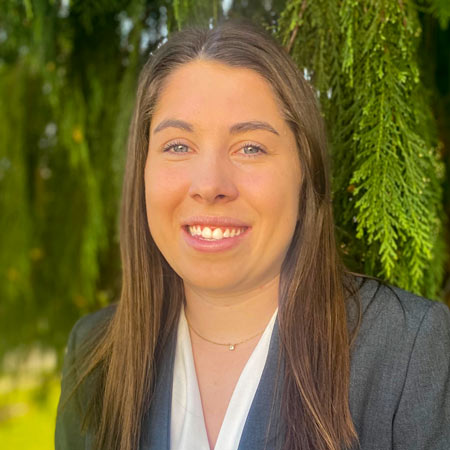 Sarah, a former Institute intern, joined The Institute in April 2021 as a Research Assistant. She started her new role as a Research Analyst in January 2024.
 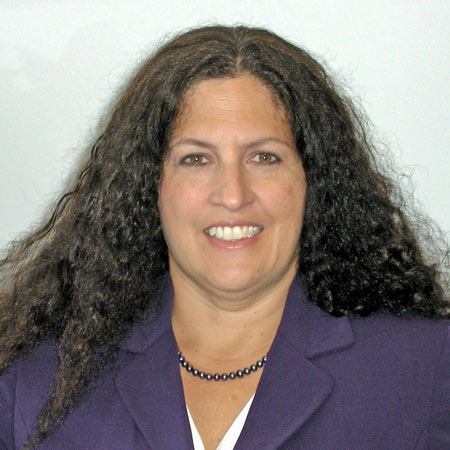 Ooms is responsible for all facets of research, organizational strategy, and management. Ooms is an active principal investigator in all Institute research. Ooms has been nationally recognized as a leader in regional economic development. She turned that skill into a research institute to help other regions develop and prosper. Her strategic skills have allowed The Institute to expand its services to the private and non-profit sectors for research and analysis in community health needs assessments, strategic planning, market and feasibility studies, and economic impact analysis.
 Jill Avery-Stoss joined The Institute in June 2018 to fill the newly-created role of Research, Data, Intern & Administrative Coordinator. She assists with the collection and management of data for purposes of ethical and efficient analysis. She visits partner campuses to market The Institute’s internship opportunities, and participates in event-planning logistical activities as well. In 2021, Jill was promoted to Director of Operations to reflect the diversity in her job description and the additional marketing and communication functions she successfully mastered in 2020. In 2022, Jill was named Chief Operating Officer after expanding into both research and administrative management functions. Jill is taking on project management, fundraising, and other executive leadership functions of the organization. In 2024, Jill Avery-Stoss assumed the role of President of The Institute, effective January 2025.